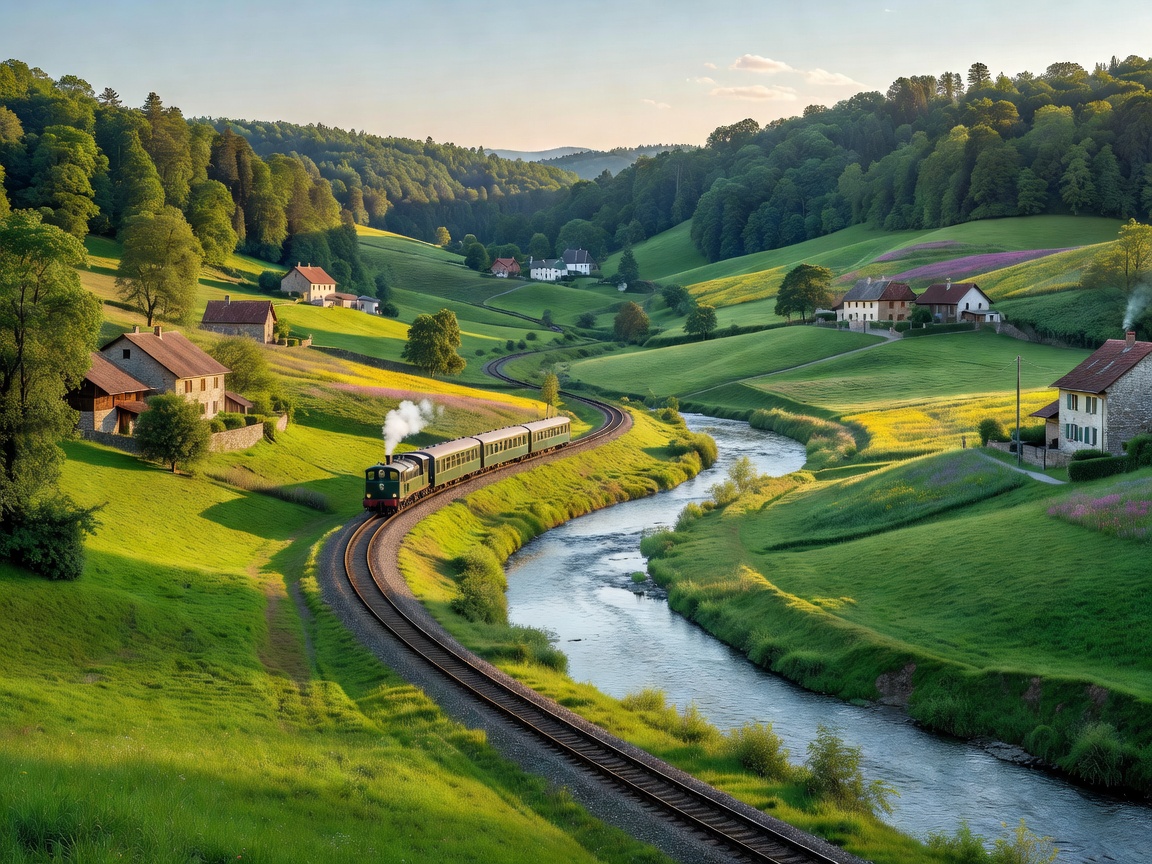
Stay longer, change less
A rural stay, a small town near a walking landscape or a nature-focused base can offer more depth than a string of overnight stops. Longer stays make practical tasks easier: you learn where to buy breakfast, recognise a path and stop treating every outing as an attraction.
Choose one or two daily intentions rather than a complete sightseeing list. A market, a walk and a local meal may be enough. The space between them is not wasted time; it is where the place starts to feel less like a backdrop.
Rail and ground transport
Rail can be a comfortable way to create distance from driving, though connections, reservations, accessibility and last-mile travel need checking in advance. Rural destinations may require a bus, taxi, bicycle or walk after the main journey. Download essential tickets and directions before leaving, and keep key details on paper.
Ground transport may take longer and be less predictable. That trade-off can be worthwhile, but build in buffers rather than planning a tight chain of connections. A slower route is not restful if every delay becomes a crisis.
Plan around local rhythms
Research broad practical patterns: shop opening times, seasonal transport, weather and public holidays. You don’t need to plan every meal, but knowing when essentials are available prevents unnecessary phone searches. Learn a few polite phrases where appropriate and be curious about ordinary routines.
Seasonal travel
Spring and autumn can suit walkers who enjoy changeable landscapes, while summer may offer longer outdoor days and busier popular areas. Winter can be deeply quiet but requires attention to daylight, weather and reduced services. The right season is the one that supports your preferred pace and comfort.
Benefits and trade-offs
Slow travel can reduce packing, transfers and the mental effort of constant orientation. It creates opportunities for local purchases, repeated walks and unplanned conversations. The trade-offs are clear: fewer landmarks, longer journeys and less control over timing. This style suits travellers who value texture over coverage.
A gentle itinerary
Arrival day: settle in and walk locally. Middle days: alternate an outing with a spacious day. Departure day: leave enough time for transport changes. Keep one paper page with addresses, opening times and a rough route. Planning lightly is still planning; it simply leaves room for the place to interrupt you.